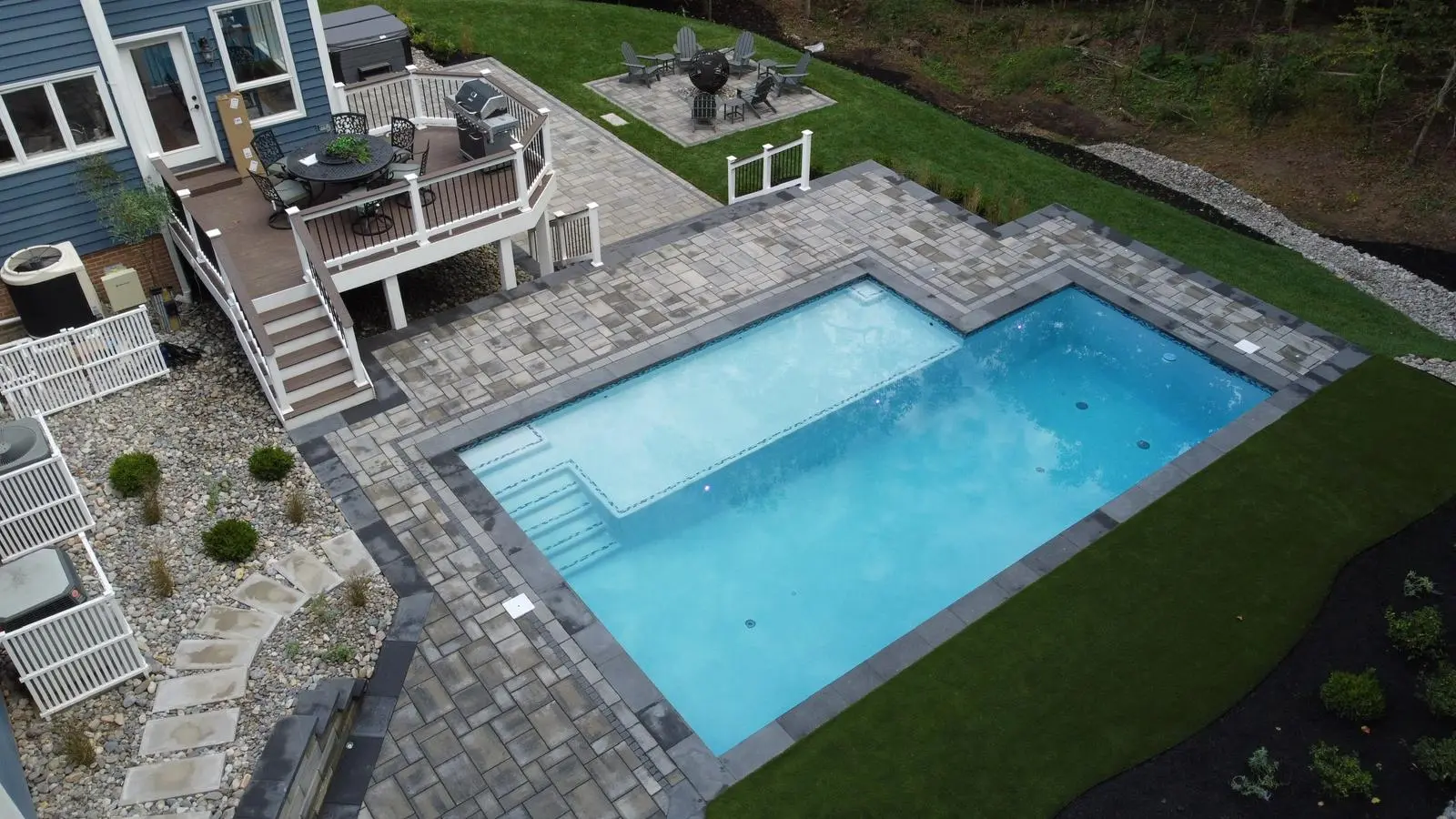
The Short Answer
Are vinyl liner pools a good option in Virginia?
Vinyl liner pools offer the lowest entry cost among inground pool types, but the liner needs replacement every 8 to 12 years and the steel or polymer wall structure does not accumulate equity the way a gunite shell does. For buyers who want an inground pool at a lower starting price and are comfortable with liner-replacement maintenance, vinyl liner is worth evaluating. For those building for 20-plus years, fiberglass or gunite typically deliver stronger long-term value.
Vinyl liner pools are one of three main inground pool types available to Virginia homeowners, alongside fiberglass and gunite. K&D builds gunite and fiberglass pools in the Fredericksburg, Spotsylvania, and Stafford area, so this page is not a sales pitch for vinyl liner. It is an honest look at what vinyl liner pools offer and what they require, so you can make the right choice for your situation.
How a Vinyl Liner Pool Is Built
A vinyl liner pool uses a steel, aluminum, or polymer wall panel structure that is assembled in the excavated hole on site, then lined with a vinyl sheet that is fitted and stretched to conform to the shape of the pool. The vinyl sheet, typically 20 to 30 mil thick, is the water-holding surface. The structural walls hold the shape. This is different from a gunite pool, where the shell itself is the structure and the interior plaster finish is sprayed on top of it, and from a fiberglass pool, where the shell arrives as a single factory-molded piece.
The wall panels can be configured to a variety of shapes, though the shape options are more limited than gunite because the liner must be manufactured to match the shape specified. Rectangular and modified rectangular shapes are most common. Custom freeform shapes are harder to execute in vinyl liner and typically cost more than a similar shape in gunite.
How Long Does a Vinyl Liner Last?
Vinyl liners in Virginia typically last 8 to 12 years. The variation is real and depends on how carefully the water chemistry is maintained, how much UV exposure the liner gets, and whether sharp objects, pets, or dragging furniture have created small punctures over the years. A liner that has been kept in properly balanced water, at a correct pH, and not exposed to aggressive chlorine levels at contact can reach the longer end of that range.
The Fredericksburg area's summer sun is significant. UV degrades vinyl over time even in properly stabilized water, and the heat-cool-heat cycle of a Virginia pool season adds mechanical stress to the liner. Liners installed in pools in direct full sun with no shade structure tend to show fading and brittleness sooner than liners that have partial shade for part of the day. This is not a reason to avoid vinyl liner pools, but it is something to account for in the ownership plan.
The Cost of Liner Replacement
Replacing a vinyl liner is the defining recurring cost of owning this pool type. A liner replacement for an inground pool in the Fredericksburg area involves draining the pool, removing the old liner, inspecting and repairing the wall panels and floor if needed, and installing the new liner. Labor and material costs for liner replacement vary by pool size and shape, and the condition of the underlying wall structure affects whether additional work is needed before the new liner goes in.
Homeowners who are comparing total 20-year ownership cost between a vinyl liner pool and a gunite or fiberglass pool should budget for two to three liner replacements over that period. The lower initial purchase price of a vinyl liner pool needs to be weighed against those recurring replacement costs. K&D's gunite and fiberglass builds do not have a liner; the shell or gelcoat is the lasting surface.
What Vinyl Liner Pools Do Well
The entry price is the main advantage. A vinyl liner pool at a given size typically costs less to build than a comparable fiberglass or gunite pool, because the wall panel system is less expensive to fabricate and the labor to set it is less intensive than forming a gunite shell on site.
The liner surface is smooth, which is comfortable underfoot and does not create the same surface texture that an older gunite plaster creates. A fresh liner is visually clean and the printed pattern options available from liner manufacturers give homeowners some design flexibility within the constraints of a vinyl pool.
Repairs to small liner punctures or tears can often be done with an underwater patch kit without draining the pool, which is a practical advantage when small damage occurs.
What Vinyl Liner Pools Require
Water chemistry management is critical for liner life. Chlorine levels that are too high at point of contact, for example from slow-dissolving tablets sitting on the liner surface, can bleach and weaken the vinyl. pH out of the normal range on either side can accelerate liner aging. The weekly chemistry routine described in the K&D maintenance guidance applies to vinyl liner pools with heightened attention to avoiding high-contact chlorine situations.
The wall panels on older vinyl liner pools can develop rust or corrosion at connection points over time, particularly when water chemistry runs low. A liner replacement project on an older pool may reveal wall panel damage that needs to be addressed before the new liner is installed. This adds cost and timeline to what would otherwise be a straightforward liner swap.
Virginia's freeze-thaw climate means the pool needs to be properly closed each fall with the liner protected from ice damage. A liner that is improperly winterized and develops a freeze crack is a premature full replacement. K&D's winterization guidance covers vinyl liner pools specifically for this reason.
Vinyl Liner vs Fiberglass vs Gunite in Virginia
The three-way comparison comes down to upfront cost, long-term cost, customization, and durability. Vinyl liner has the lowest initial cost and the highest recurring maintenance cost from liner replacement. Fiberglass has a moderate initial cost, essentially no resurfacing or liner cost for the life of the shell, and is the fastest to install once permits clear. Gunite has the highest initial cost and full design flexibility, but needs replastering every 10 to 15 years.
For a direct comparison between gunite and fiberglass, see gunite vs fiberglass pools Virginia.
For how long a gunite pool shell lasts before it needs work, see when does a gunite pool need to be resurfaced.
Is K&D the Right Builder for Vinyl Liner?
K&D builds gunite and fiberglass pools. If vinyl liner is the right fit for your budget and situation, K&D will say so clearly and can direct you to builders who specialize in that pool type in the Fredericksburg market. What K&D does not do is build you a vinyl liner pool when fiberglass or gunite is the better long-term answer for your property, or the reverse. The design conversation starts honestly.
To understand all your pool type options in Virginia, start with gunite vs fiberglass pools Virginia and contact K&D at /get-a-quote to discuss your site.
More Questions
Frequently Asked Questions
How much does a vinyl liner pool cost compared to gunite?
Vinyl liner pools typically have a lower starting price than gunite at similar sizes, largely because the wall panel system costs less than forming a custom gunite shell. The gap narrows when you account for liner replacements over 20 years. K&D builds gunite and fiberglass and gives honest comparisons for your specific project at /get-a-quote.
How often does a vinyl pool liner need to be replaced?
Most inground vinyl liners last 8 to 12 years in Virginia depending on water chemistry management, UV exposure, and physical wear. Budget for two to three replacements over a 20-year ownership period.
Can a vinyl liner pool be saltwater?
Yes. Vinyl liner pools can use a salt chlorine generator. The chemistry targets and management approach are the same as a traditional chlorine pool. The liner material is generally compatible with saltwater chemistry at proper operating levels.
Can vinyl liner pools be custom shapes?
Rectangular and modified rectangular shapes are the most common. Custom freeform shapes are possible but more expensive because the liner must be manufactured to match the specific shape. Gunite offers more flexibility for genuinely custom shapes without the custom liner cost.
What happens if a vinyl liner tears?
Small tears and punctures can often be patched underwater with a vinyl patch kit without draining the pool. Larger tears or age-related cracking typically require a full liner replacement. A liner that fails prematurely due to poor chemistry or improper winterization may need replacement before the normal 8 to 12 year window.
Does K&D build vinyl liner pools?
K&D builds gunite and fiberglass pools. If vinyl liner is the right fit for your budget, K&D will be straightforward about it during the design conversation. The goal is the right pool for your property, not the most expensive one.
Also From K&D
Explore More
Talk to a Local Pool Builder.
We build gunite and fiberglass pools across the Fredericksburg area. Ask us anything.