The Short Answer
When and how often does a gunite pool need to be resurfaced?
A gunite pool with a standard white plaster finish typically needs resurfacing every 10 to 15 years. Pebble and aggregate finishes last 15 to 25 years or longer with proper water chemistry. Virginia's freeze-thaw climate and pool chemistry management both affect how quickly the interior finish wears. Consistent water chemistry is the single biggest variable in plaster longevity.
Gunite pools are built to last for decades, but the interior finish, the surface you see and touch inside the pool, is not permanent. All gunite pool interiors need to be resurfaced at some point, and knowing when and why helps owners plan appropriately. This page covers the resurfacing timeline for the main finish types, the signs that a finish is approaching the end of its service life, and what the resurfacing process involves for Virginia pool owners.
Why Gunite Pools Need Resurfacing
The shell of a gunite pool is concrete and steel, and it lasts essentially indefinitely when properly built. The interior finish applied over the shell is a different material. White plaster, the most common original finish, is a cement-based coating that is applied over the shell and smoothed to a uniform surface. Over time, plaster erodes, stains, becomes rough, and eventually develops enough surface defects that it is uncomfortable to swim against and difficult to keep clean.
Pebble and aggregate finishes, which are cement-based matrices with exposed stone or glass aggregate, wear more slowly than white plaster because the durable aggregate is the contact surface rather than the softer cement paste. These finishes cost more at installation and deliver more years of service.
Finish Lifespans in Virginia
White plaster in the Fredericksburg area typically lasts 8 to 15 years before resurfacing is warranted. The range is real. A pool whose water chemistry has been kept in tight range throughout its life, with pH consistently between 7.4 and 7.6 and calcium hardness maintained in the 200 to 400 ppm range, will be at the longer end. A pool that has run consistently low in calcium hardness, or that has frequently had pH swings outside range, may need resurfacing closer to the 8 to 10 year mark.
Virginia's freeze-thaw climate adds mechanical stress to pool plaster surfaces. The repeated expansion and contraction of the pool shell and surrounding soil over winter cycles contributes to micro-cracking in older plaster surfaces, which then allows water penetration that accelerates degradation. Pools that are properly winterized and opened minimize this exposure.
Pebble and aggregate finishes in Virginia typically last 15 to 25 years under similar chemistry conditions. The aggregate surface resists the erosion that affects white plaster and does not show roughness the same way. A well-maintained pebble finish pool can go significantly longer than 15 years before resurfacing is needed.
Signs Your Gunite Pool Needs Resurfacing
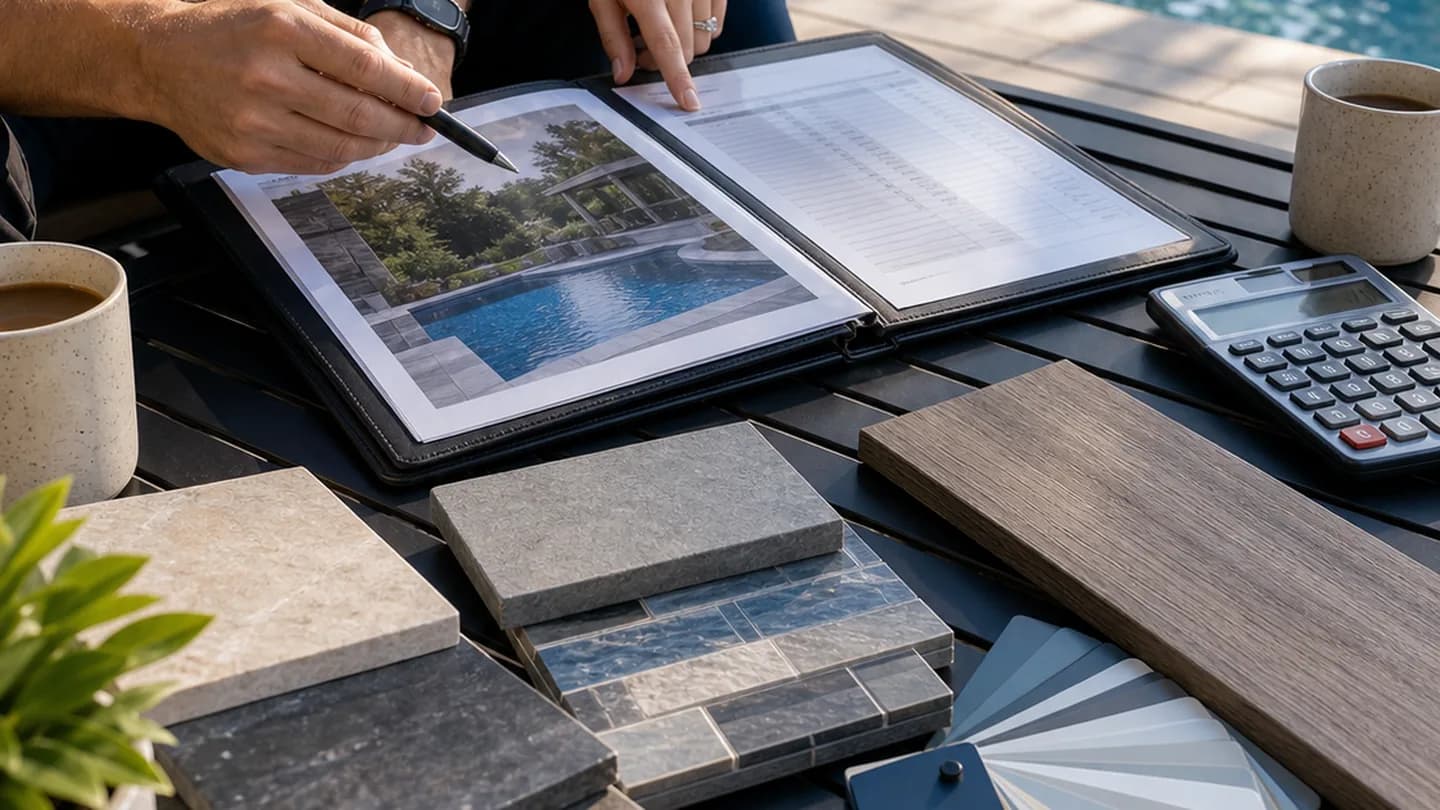
Rough surface texture is the first sign most owners notice. When the plaster surface feels like sandpaper against your hand or feet rather than smooth, the cement paste has eroded past the point where the surface is comfortable. This is the sign that resurfacing is approaching in the near term.
Staining that cannot be removed by brushing, acid treatment, or professional cleaning indicates that the plaster is porous enough that minerals and organic material have penetrated the surface rather than sitting on top of it. Permanent staining on the plaster surface is a strong indicator that resurfacing is needed.
Etching and pitting, visible as small craters or irregular surface texture, indicate that aggressive water chemistry has dissolved the surface of the plaster. Water that is low in calcium hardness is particularly corrosive to plaster. Etching that has progressed significantly is a sign the plaster has limited remaining service life.
Delamination, where sections of plaster separate from the shell and create raised or hollow-sounding areas, is a more advanced failure that requires immediate attention. Delaminated plaster can come loose and damage equipment.
What Pool Resurfacing Involves
Resurfacing a gunite pool requires draining the pool completely, allowing the shell to dry, and mechanically removing the existing plaster or aggregate coating down to the shell. The shell is then inspected for any structural issues, cracks, or plumbing problems that should be addressed while the pool is open and dry. After any repairs, the new interior finish is applied and cured before the pool is refilled.
The refill and startup chemistry process after resurfacing is important. New plaster requires specific startup chemistry to cure properly and avoid early staining or discoloration. K&D provides startup guidance for post-resurfacing fills.
How Chemistry Extends Finish Life
The longest-lasting gunite pools are owned by people who test and balance water consistently. The relationship between water chemistry and plaster life is direct and documented. Low pH and low calcium hardness create aggressive water that attacks the plaster. High pH and high calcium hardness create scaling water that deposits minerals on the plaster surface and inside equipment. The target ranges for pH (7.4 to 7.6) and calcium hardness (200 to 400 ppm) are not arbitrary. They describe the balance where water is neither aggressive nor scaling.
For the chemistry targets that protect your finish, see pool chemistry basics for new pool owners.
For how Virginia winters affect the pool shell and plaster, see pool construction freeze-thaw Virginia.
For the full maintenance routine that protects your investment, see how to maintain an inground pool.
To explore finish options for a new gunite pool, see gunite pools or visit /get-a-quote.
More Questions
Frequently Asked Questions
How much does it cost to resurface a gunite pool?
Gunite pool resurfacing cost in the Fredericksburg area depends on pool size, the existing surface condition, and the finish type selected. A larger pool or one with significant structural repairs before resurfacing costs more. K&D provides current resurfacing quotes based on your pool's specific size and condition.
Can I delay resurfacing if the pool still holds water?
You can, but rough and porous plaster is harder to clean, harbors algae more readily, and can be uncomfortable for swimmers. A pool at the end of its plaster life also requires more chemicals to maintain balance because the porous surface interacts more aggressively with water chemistry. Delaying past the functional end of plaster life increases long-term costs.
Is pebble finish worth the extra cost?
For most Virginia homeowners, yes. Pebble and aggregate finishes last significantly longer than white plaster, are more forgiving of water chemistry fluctuations, feel more comfortable underfoot, and do not show staining the same way. The higher upfront cost is offset by fewer resurfacing cycles over the pool's life.
Does resurfacing count as a renovation for permit purposes?
Interior resurfacing of a gunite pool is generally not a permit-required modification in the Fredericksburg area because it is maintenance of an existing permitted structure. Adding features or making structural changes during a resurfacing project may require permits. K&D clarifies this for your specific project.
How long does pool resurfacing take?
A typical gunite pool resurfacing project takes one to two weeks for the surface work itself. Add the drain, dry, and cure time and the full process before refill is typically two to three weeks. The first-fill startup chemistry period adds a few more days.
Can I resurface part of the pool if only one area is damaged?
Patching specific areas is possible, but patch repairs are visible against the existing plaster because the new material never matches the aged surface perfectly. Most pool owners opt for full resurfacing rather than patching when the surface has reached the end of its life in any section.
Also From K&D
Explore More
Talk to a Local Pool Builder.
We build gunite and fiberglass pools across the Fredericksburg area. Ask us anything.