The Short Answer
What landscaping works well around an inground pool in Virginia?
Virginia pool landscaping works best with drought-tolerant, low-debris plants positioned far enough from the pool that roots will not threaten plumbing, and that shed minimal leaf or flower debris into the water. Privacy plantings on the perimeter, shade trees set back from the pool, ornamental grasses, and flowering perennials suited to Virginia's zone 7 climate create a functional and attractive pool surround without constant maintenance fights.
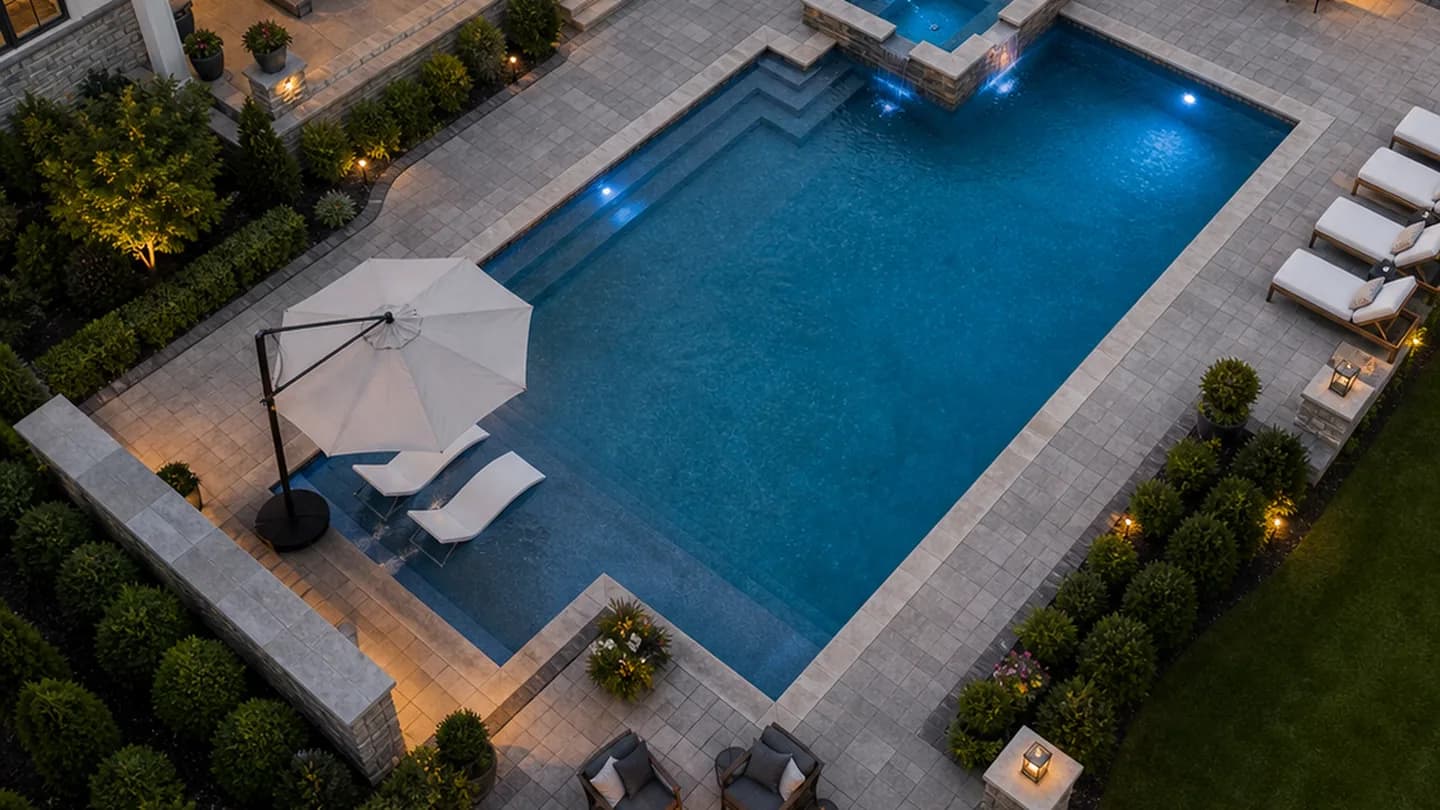
The landscaping around a pool does as much for the backyard experience as the pool itself. A pool set in a bare concrete deck surrounded by an empty yard looks institutional. The same pool surrounded by lush plantings, privacy screening, and a mix of shade and color looks like a destination. In Virginia's climate, achieving that result requires selecting plants that tolerate the specific conditions around a pool, from splashout salt and chlorine on foliage near the pool edge to the full sun, dry conditions that often characterize the areas beyond the deck.
The Priority: Root Safety
The first landscaping consideration for any pool project is root safety. Tree and shrub roots that grow toward pool plumbing, the shell foundation, or the deck slab can cause expensive damage. The risk is not limited to large trees. Even moderately sized shrubs planted close to the pool edge can send roots toward the moisture-rich environment of the pool plumbing over a decade.
As a general rule, large trees should be planted no closer to the pool than the height the tree will reach at maturity. A tree that will reach 40 feet should be at least 40 feet from the pool shell. Smaller ornamental trees and large shrubs can be planted closer but should still be kept outside the area where the plumbing runs.
K&D provides a rough plumbing layout diagram at project closeout that shows where underground lines run. This diagram is the guide for where not to plant, and any landscaper working on the property after the pool is built should have a copy.
Debris Management: Choosing Low-Litter Plants
Plants that shed significant leaf debris, seedpods, or flowers into the pool require more frequent skimming and filter cleaning. Some trees, like Bradford pears, silver maples, and sweetgum, shed continuously throughout the season. Others, like crepe myrtles, drop flower heads. Large-leafed plants near the water create cleanup after every wind event.
For the immediate pool surround, within five to ten feet of the water, the best plant choices are compact, low-debris shrubs and perennials. Beyond that zone, larger plants and grasses can contribute more debris without as much consequence. K&D recommends discussing the landscaping plan with any landscape designer before plants are placed to avoid creating a debris pattern that fights the pool maintenance routine.
Virginia Zone 7 Plants That Work Well Near Pools
Ornamental grasses are among the best pool-area plants for Virginia. Miscanthus varieties, fountain grass (Pennisetum), and Karl Foerster feather reed grass are upright, architectural in form, heat-tolerant, and shed minimal debris into the pool when positioned appropriately. They add movement and texture to the pool surround and do not require the intensive pruning that many shrubs need.
Loropetalum, abelia, and dwarf nandina are low-maintenance shrubs that tolerate Virginia's heat and humidity and stay in bounds without aggressive pruning. They can create a green backdrop near the pool or fill corners of the deck area without causing debris problems.
Perennials like black-eyed Susans, coneflowers, and salvias add seasonal color and are tolerant of the dry conditions that often develop near pool decks where the concrete draws heat and reduces soil moisture. These Virginia-native and well-adapted species support local pollinators and require minimal inputs once established.
Crepe myrtles are a widely used pool-area plant in Virginia. They provide summer color and a tree-form presence. The trade is that they drop their flower heads, which can require skimming if planted too close to the water. Position crepe myrtles at the perimeter of the pool area rather than directly adjacent to the water.
Privacy Screening Around Virginia Pools
Privacy from neighboring lots and from the street is a common goal for pool landscaping. In Stafford and Spotsylvania subdivisions where lots are often adjacent without significant grade or distance separation, screening at the perimeter of the pool fence provides visual privacy without requiring a tall solid fence.
Arborvitae, Foster holly, and Leyland cypress are the most commonly used privacy screens in the Fredericksburg area for pool surrounds. All three grow as vertical columns or tight pyramids that create a green wall effect. Leyland cypress grows rapidly and provides privacy quickly but can become very large if not managed. Foster holly grows more slowly but is more sustainable in size. Arborvitae varieties like Green Giant are among the most popular because they grow quickly, maintain a tidy form, and tolerate Virginia's summers and winters.
Living privacy screens should be planted outside the pool fence so that any maintenance pruning can be done from the exterior without requiring access through the pool gate. The fence serves as the barrier; the plants serve as the visual screen.
Shade Structure and Mature Shade Planning
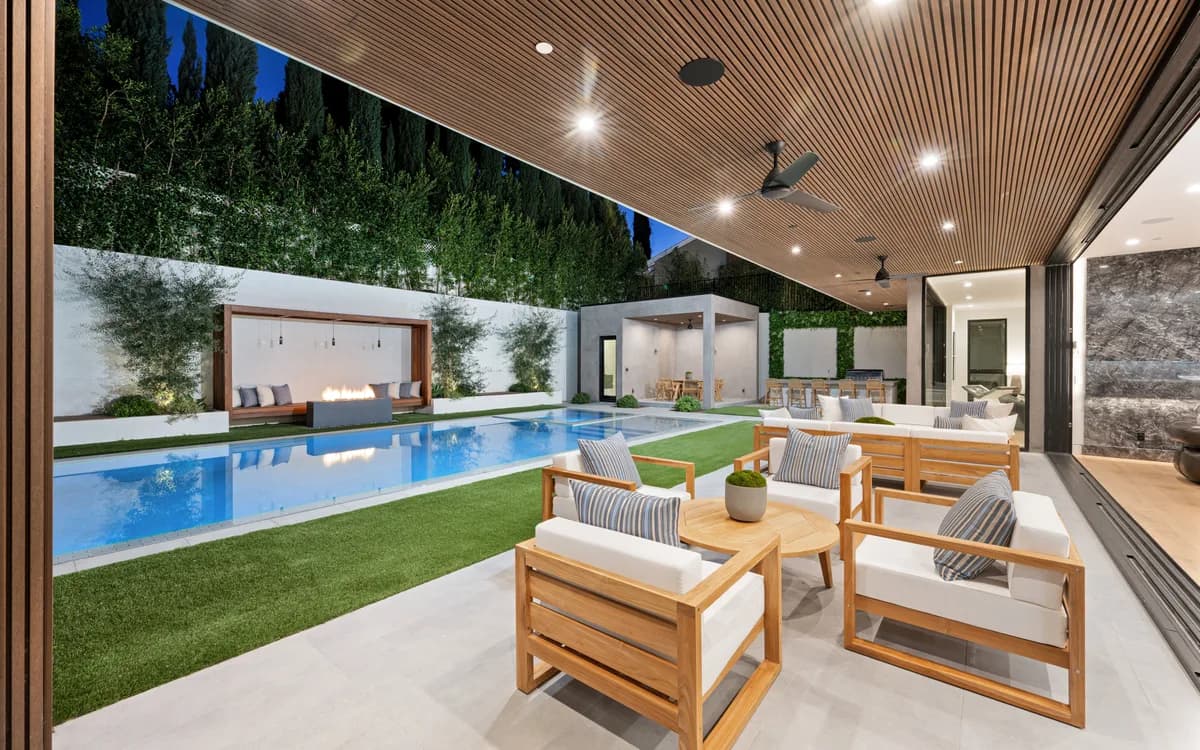
Shade is valuable in Virginia's summer, where afternoon temperatures regularly exceed 90 degrees Fahrenheit. A pool surround with no shade becomes uncomfortable for anyone not in the water by early afternoon. Pergolas, shade sails, and covered patio structures provide immediate shade. Trees provide shade that deepens and improves over years.
If you are planting shade trees near the pool, select species with deep rather than shallow root systems and position them to shade the deck rather than the pool itself. A pool in full shade algaes more readily and stays colder. A deck with afternoon shade is more comfortable while keeping the pool in at least partial sun. Live oaks, tulip poplars at a distance, and native serviceberry are shade species that perform in Virginia's climate without the aggressive root systems that some fast-growing shade trees develop.
Hardscape That Complements the Landscape
The relationship between the pool deck material and the surrounding landscape determines how finished the overall backyard looks. A paver deck that transitions to stepping stone paths through the lawn, or a stamped concrete deck that uses the same color palette as the stone used in a garden wall, creates a cohesive design rather than a pool dropped into a yard.
Planters, raised beds at the perimeter, and built-in seat walls around the pool area create structure that landscape plantings can anchor to. These elements are most cost-effective when designed as part of the pool and deck project rather than added afterward.
For pool and deck design that integrates the landscape from the start, see custom inground pools.
For deck material options that affect how the landscape complements the pool, see pool deck material options Virginia.
For the complete backyard approach K&D takes, see complete backyard.
Start your pool and backyard design at design your pool or request a quote at /get-a-quote.
More Questions
Frequently Asked Questions
What plants should I avoid near a pool in Virginia?
Avoid large trees with aggressive or shallow root systems close to the pool shell and plumbing. Bradford pears, silver maples, weeping willows, and sweetgum create significant debris and root spread. Also avoid plants with thorns or berries near pool areas where bare feet are the norm.
Can I plant grass right up to the pool fence?
Yes, but lawn grass adjacent to the pool fence can blow clippings into the pool when mowed. A mulched border or low groundcover bed between the fence and the lawn reduces the grass-clipping-in-the-pool problem. Many pool owners plant a groundcover bed along the fence line to create a buffer.
What is the best privacy screen for a pool in Virginia?
Arborvitae Green Giant, Foster holly, and Leyland cypress are widely used for pool privacy screening in the Fredericksburg area. All three provide year-round evergreen screening. Green Giant arborvitae grows quickly and stays tidy with minimal pruning. Position privacy plantings outside the pool fence.
Do splash-zone plants need to be chlorine-tolerant?
Plants immediately adjacent to the pool can receive occasional pool water splash, which carries chlorine and salt in a saltwater pool. Most ornamental shrubs and grasses handle occasional splash without damage. Plants with thin, sensitive leaves placed directly at the pool edge may show bleaching if splashed repeatedly.
How far should trees be planted from the pool?
A general guideline is to plant large trees no closer to the pool than the tree's mature height. Smaller ornamental trees can be planted closer, outside the root zone of the plumbing. K&D provides a plumbing layout diagram at project closeout to guide landscaping decisions.
Does K&D include landscaping in a pool project?
K&D builds the pool, deck, and fence as the core project. Landscaping design and planting is typically handled by a separate landscape contractor. K&D can provide referrals to landscape partners experienced with pool surround design in the Fredericksburg area.
Also From K&D
Explore More
Talk to a Local Pool Builder.
We build gunite and fiberglass pools across the Fredericksburg area. Ask us anything.