
Pool Guide
Adding an Outdoor Kitchen to Your Pool Project in Virginia
The Short Answer
Should I add an outdoor kitchen when building a pool in Virginia?
Building an outdoor kitchen alongside your pool almost always costs less than doing them as separate projects, because you share excavation, utility trenching, permit fees, and contractor mobilization. The design team can integrate the kitchen into the deck and hardscape plan from the start, which produces a more cohesive result. If an outdoor kitchen is on your list for this property, doing it now is almost always the smarter financial move.
A backyard pool changes how Virginia families use outdoor space. Where the yard was once a place to walk through or mow, it becomes a place to spend time. That shift creates a natural appetite for the amenities that make extended outdoor time comfortable: shade structures, seating areas, and a place to prepare food without going back inside the house. An outdoor kitchen fits naturally into that picture, and the decision of when to build it comes down to cost and logistics.
Why Combining Projects Saves Money
When you build an outdoor kitchen at the same time as your pool, you share several major cost items that would otherwise be paid twice. Utility trenching is one of them. Gas lines, electrical circuits, and water supply for an outdoor kitchen all need to be run from the house, and if the pool contractor is already trenching for pool plumbing and electrical, adding runs for the kitchen during the same dig is far less expensive than opening the yard a second time later.
Permit fees also tend to be lower when you combine a pool and outdoor structure into a single permit application. The design and plan review processes overlap, and in some Virginia jurisdictions, a combined application requires only one review cycle rather than two. Contractor mobilization, the cost of getting equipment and a crew to your site, is paid once rather than twice.
The design integration benefit is equally important. A kitchen built at the same time as the pool deck can be positioned, sized, and oriented to work with the pool layout rather than fitting into whatever space is left over. Sight lines, traffic flow between the kitchen and the pool, and the relationship between the cooking area and seating or dining space are all easier to get right when the whole project is designed as one.
What a Virginia Outdoor Kitchen Typically Includes
A basic outdoor kitchen in the Fredericksburg area starts with a grill, a durable countertop surface, and some under-counter storage. From there, homeowners add elements based on how they cook and entertain: a side burner, a refrigerator, a sink, a built-in pizza oven, a bar counter with seating, or a covered structure to protect the cooking area from rain and direct sun.
Materials matter in Virginia's climate. Outdoor kitchens face humidity, hot summers, cold winters, and occasional ice and snow. Stainless steel appliances rated for outdoor use hold up better than indoor appliances repurposed outdoors. Counter surfaces should be sealed stone, porcelain tile, or a comparable material that handles freeze-thaw cycles without cracking. Framing for a built-in outdoor kitchen is typically concrete block or steel stud with cement board cladding rather than wood framing, which degrades in outdoor conditions.
Permits in Stafford, Spotsylvania, and Fredericksburg
An outdoor kitchen attached to a pool deck or a covered structure may require a building permit in Virginia, depending on the specifics. A freestanding grill on a patio does not require a permit. A built-in kitchen with gas plumbing, electrical outlets, and a dedicated water supply line does. Stafford County, Spotsylvania County, and the City of Fredericksburg have different thresholds, and the type of structure, covered versus uncovered, attached versus freestanding, also affects the permit requirement.
Your pool contractor should know the permit requirements for combined pool and outdoor living projects in your jurisdiction. Ask specifically before work begins which elements of the proposed outdoor kitchen require permits, and confirm that those permits are pulled and inspected. Unpermitted outdoor kitchens can create title issues when you sell, particularly if the gas or electrical work is involved.
Gas vs. Electric in a Virginia Outdoor Kitchen
Most Virginia homeowners who build outdoor kitchens choose gas for cooking, either connected to the home's natural gas line if available or to a dedicated propane tank. Gas provides precise heat control and the instant-on convenience that makes outdoor cooking practical. In Stafford and Spotsylvania, where natural gas availability varies by neighborhood, many outdoor kitchens run on propane with a buried or concealed tank.
Electrical is needed for refrigeration, lighting, and any outlets for small appliances. Outdoor-rated GFCI outlets are required by code anywhere that electrical receptacles are within a certain distance of water, which near a pool means essentially everywhere in the outdoor kitchen. This electrical work should be done by a licensed electrician and inspected before the circuit is energized.
Planning the Layout Around Your Pool
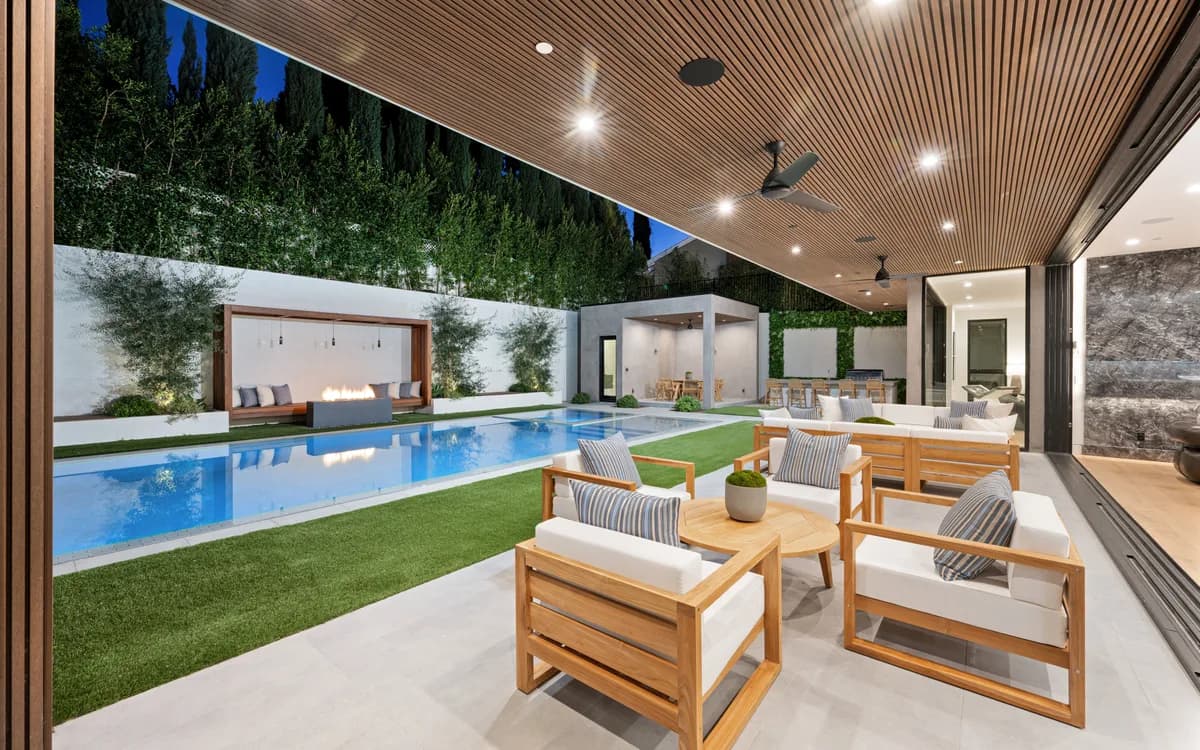
The most common placement for an outdoor kitchen is at the shallow end or along a side of the pool, far enough from the water's edge that splashing does not create a constant cleaning burden but close enough that a cook can watch swimmers and participate in the social activity around the pool. A bar or counter that faces the pool, rather than facing a fence or a wall, makes the kitchen feel like part of the outdoor living space rather than an afterthought.
For help designing a complete backyard that integrates pool, deck, outdoor kitchen, and landscaping as a unified space, explore our complete backyard projects. The K&D team works on outdoor living spaces as a whole, not just the pool, and can help you think through how each element relates to the others before you commit to a design.
If you are still in the early stages of deciding whether to build a pool, our guide on whether an inground pool is worth it in Virginia covers the financial and lifestyle considerations that most Virginia homeowners work through before committing to the project.
More Questions
Frequently Asked Questions
Does an outdoor kitchen need a permit in Stafford County, Virginia?
An outdoor kitchen in Stafford County that includes gas plumbing or a new electrical circuit will require at minimum a plumbing or electrical permit. A structure with a roof or an attached cover typically requires a building permit as well. Check with the Stafford County Department of Planning and Zoning before starting construction. Requirements change, and working with a contractor who regularly builds in the county ensures the permit list is current.
How close can an outdoor kitchen be to the pool water?
Virginia and national code requirements specify minimum distances between water and electrical components, gas appliances, and other features. Generally, electrical receptacles must have GFCI protection within 20 feet of pool water, and appliances must be positioned to keep operators a safe distance from the pool edge. Your pool contractor and the local permit office can give you the specific setback requirements for your jurisdiction.
What countertop materials hold up best in Virginia outdoor kitchens?
Porcelain tile and sealed granite or quartzite are among the most durable countertop choices for Virginia outdoor kitchens. They handle freeze-thaw cycles, UV exposure, and the humidity swings of a Virginia summer without cracking, fading, or absorbing water. Unsealed natural stone and certain engineered surfaces are less appropriate for outdoor applications in a climate that sees both high heat and hard freezes.
Can I add an outdoor kitchen to an existing pool deck later?
Yes, but it is typically more expensive and disruptive than building both at the same time. Retrofitting gas and electrical into an existing deck requires cutting through hardscape materials, potentially rerouting water lines, and working around existing plantings and structures. The result can be excellent, but the labor cost is higher than the same work done during original construction.
Also From K&D
Explore More
Talk to a Local Pool Builder.
We build gunite and fiberglass pools across the Fredericksburg area. Ask us anything.