
Pool Guide
Above-Ground vs. Inground Pool in Virginia: An Honest Comparison
The Short Answer
Is an above-ground pool or an inground pool the better choice for a Virginia home?
An above-ground pool costs far less upfront, installs quickly, and can be removed if you move. An inground pool is a permanent improvement that adds property value, lasts significantly longer, and provides a better recreational and visual experience. For Virginia homeowners who plan to stay in their home, an inground pool is almost always the stronger long-term investment.
The choice between an above-ground pool and an inground pool in Virginia comes down to budget, timeline, how long you plan to stay in your home, and what you want the pool to do for your property and your family. Both options let you swim in your backyard. Beyond that, the differences are significant.
Cost: What You Actually Pay in Virginia
An above-ground pool, including the pool itself, a basic deck, a pump and filter, and installation, can be purchased and installed for a fraction of what an inground pool costs. The tradeoff is what you get for that money. Above-ground pools use lower-grade materials, sit on top of your yard rather than integrating with it, and typically last 7 to 15 years before the wall structure begins to fail.
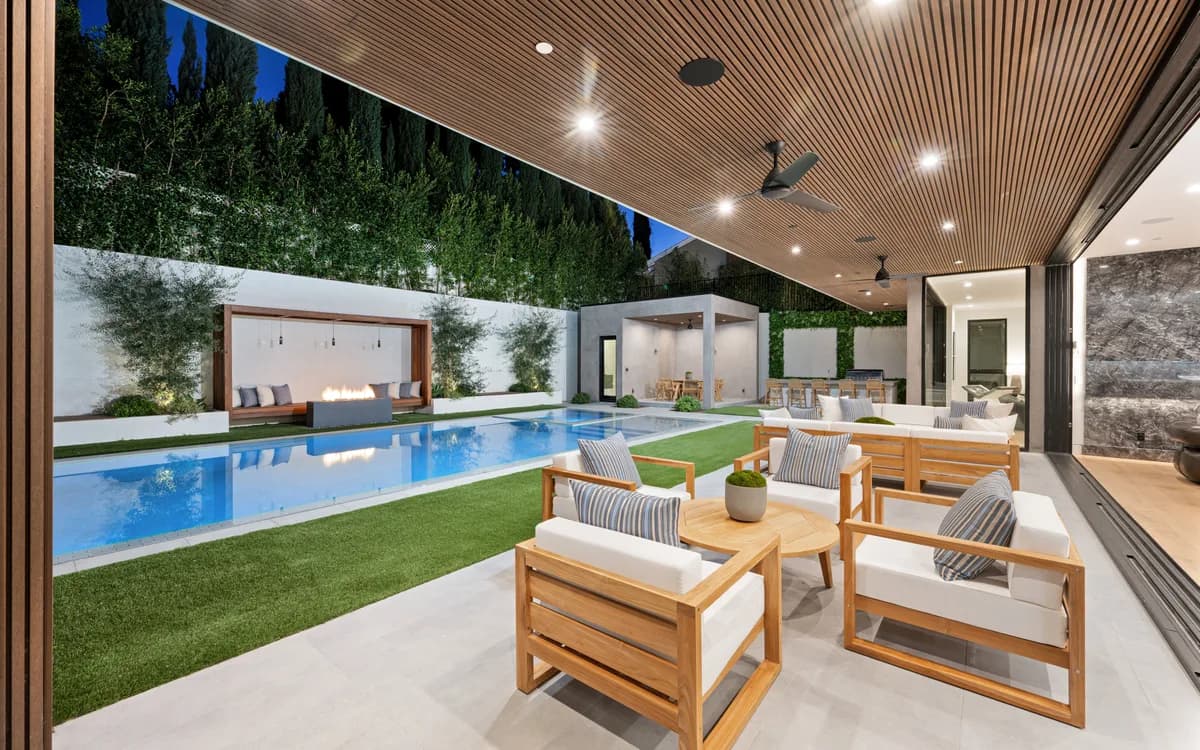
An inground pool involves excavation, a permanent shell, plumbing, electrical, decking, coping, and landscaping. The investment is substantially higher, but what you are paying for is a permanent improvement to your property that can last 25 to 50 years or more with proper care. The higher initial cost is spread over a much longer useful life.
For a detailed look at what drives inground pool costs in this market, our guide to inground pool cost in Fredericksburg, VA breaks down what you pay for, what choices affect price most, and what a realistic budget looks like for the Northern Virginia market.
Lifespan and Durability in Virginia's Climate
Virginia's climate is hard on above-ground pools. Freeze-thaw cycles in January and February can stress the pool's walls and floor liner. Summer UV exposure and heat degrade the liner and wall materials faster than in cooler climates. An above-ground pool that is properly winterized and maintained can reach 15 years, but many in Virginia show significant wear well before that.
A gunite inground pool handles Virginia's climate well when properly built. The shell is not affected by freeze-thaw in the way a metal wall is. The pool needs to be winterized properly to protect the plumbing and equipment, but the structure itself is not at risk from seasonal temperature cycles. A vinyl liner pool, whether inground or above-ground, needs liner replacements every 10 to 15 years, but the structural shell lasts much longer.
Property Value: What Appraisers and Buyers See
An above-ground pool adds little to no assessed value to a Virginia home and in some cases is viewed by buyers as something they will have to remove. It occupies yard space without integrating into the property aesthetically, and buyers know they are inheriting a structure with limited remaining useful life.
An inground pool, by contrast, is a permanent improvement that appraisers include in their valuation and that buyers in the Fredericksburg and Stafford market actively seek. Our guide on whether a pool adds value to a Virginia home covers how appraisers assess pools, what buyers in Northern Virginia expect, and when a pool helps your sale versus when it complicates it.
HOA Rules in Northern Virginia
Many planned communities in Stafford County, Spotsylvania County, and the Fredericksburg area have HOA rules that directly address pools. A significant number of these HOAs prohibit above-ground pools outright, either because of appearance standards or safety concerns. Inground pools with compliant fencing and deck finishes are typically permitted, though some communities require architectural review before construction.
Before you purchase either type of pool, check your HOA's declaration and design standards. If you are in a community that prohibits above-ground pools, your choice is made for you. If your community allows above-ground pools but requires they be fully enclosed with a deck, the cost and effort of complying can narrow the price advantage considerably.
Timeline and Disruption
An above-ground pool can be delivered and installed in one to two days once the site is prepared. An inground pool requires excavation, shell construction, plumbing, electrical, decking, and inspections, a process that typically takes six to twelve weeks from permit issuance to the day you can swim. If you need a pool this summer and the season is already well underway, an above-ground pool may be your only option for immediate gratification.
For a realistic timeline on an inground pool project in Northern Virginia, our guide on how long a pool build takes in Virginia covers what happens at each phase and why the timeline is what it is. Planning early, ideally the fall before you want to swim, gives you the best chance of being in the water by Memorial Day.
The Long-Term Perspective
The right choice depends on your circumstances. If you are renting, plan to move in two to three years, have a very tight budget, or live in a community where inground pools are not practical, an above-ground pool serves its purpose at a price that makes sense. If you own your home, plan to stay for five or more years, and want a pool that improves your property and your quality of outdoor living, the investment in an inground pool typically justifies itself over time.
More Questions
Frequently Asked Questions
Can I install an above-ground pool in a Virginia yard without a permit?
Virginia permit requirements for above-ground pools vary by jurisdiction. Many counties do not require a building permit for above-ground pools under a certain size but do require an electrical permit for the pump wiring. Check with your county's building department before installing. Skipping a required permit can complicate a future home sale.
Do above-ground pools require fencing in Virginia?
Virginia's residential pool barrier requirements apply to pools that hold at least 24 inches of water. Above-ground pools that meet this threshold are subject to barrier requirements. The pool's wall itself may satisfy the height requirement in some jurisdictions if it is at least 48 inches tall, but check with your county because local interpretations vary.
Is it cheaper to heat an above-ground pool than an inground pool?
An above-ground pool's smaller water volume heats faster than a large inground pool, but above-ground pools also lose heat faster because the walls and floor are exposed to ambient air rather than insulated by the surrounding ground. A quality solar cover reduces heat loss significantly for both pool types.
What happens to an above-ground pool in a Virginia winter?
An above-ground pool needs to be properly winterized in Virginia, including draining the water to below the skimmer, adding winter chemicals, and covering the pool with a winter cover. The pool wall and liner should survive Virginia winters without damage if they are in good condition and the winterization is done correctly. Pools left to freeze without winterization often sustain liner damage.
Also From K&D
Explore More
Talk to a Local Pool Builder.
We build gunite and fiberglass pools across the Fredericksburg area. Ask us anything.