
Pool Blog
Gunite vs Fiberglass Pools: Which Holds Up Better in Virginia?
Both gunite and fiberglass pools hold up in Virginia when they are built correctly for local soil and freeze-thaw winters. The difference is not which material lasts longer. It is which one fits your yard, your timeline, and how you want to use the space.
K&D Pools·June 17, 2026
The Core Question
Homeowners often frame this as which material lasts longer. That is the wrong question. Both gunite and fiberglass pools built to proper standards in Virginia will outlast the typical ownership period of a home. The real question is which one fits your specific situation better.
What Gunite Pools Are Built For
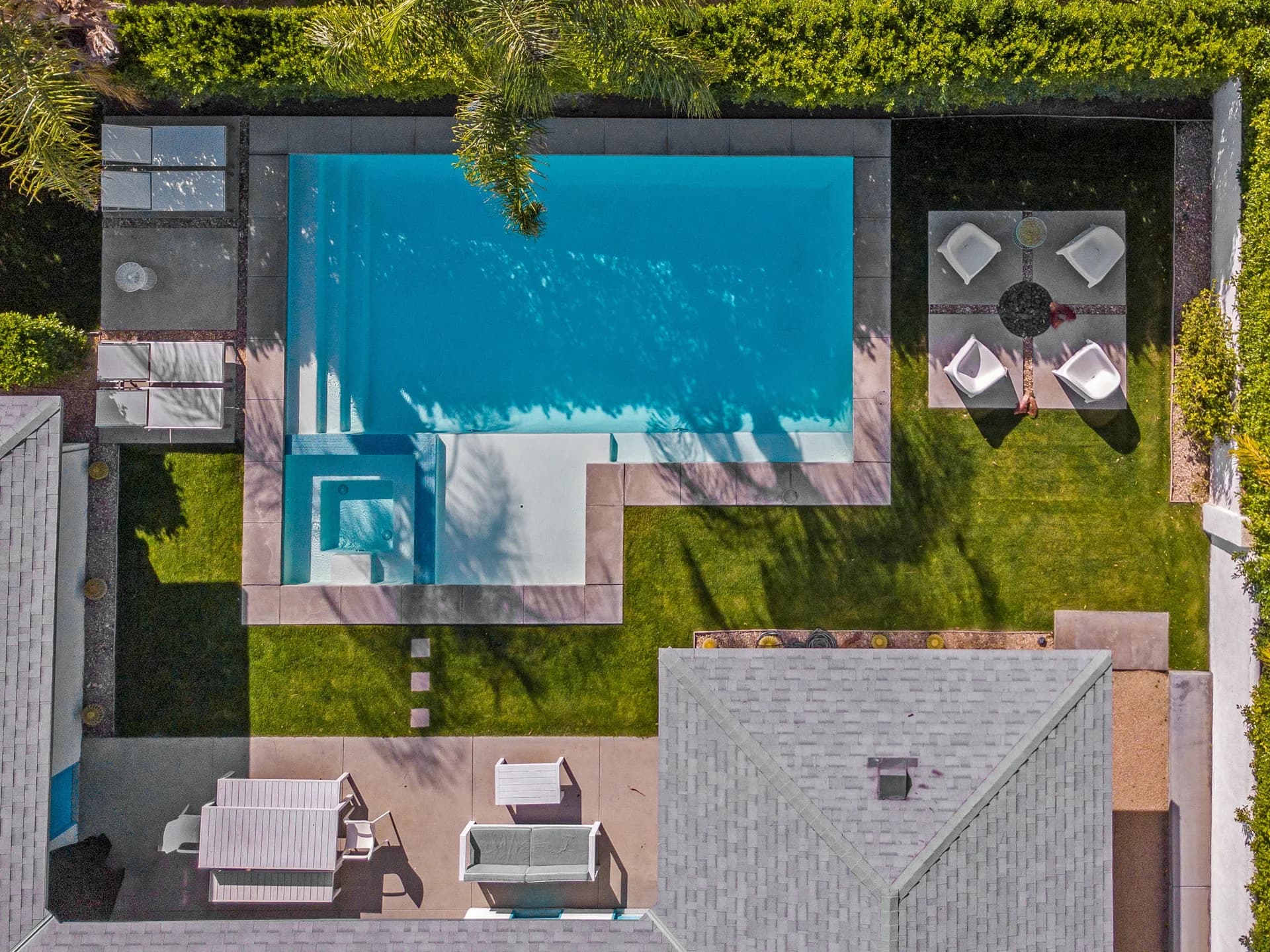
Gunite is concrete, formed and sprayed on site around a steel rebar frame. Because the shell is built in place, you can design any shape, depth, or feature: vanishing edges, tanning ledges, beach entries, integrated spas, or free-form curves that follow a property line. If the design matters and you want real customization, gunite is the path.
What Fiberglass Pools Are Built For
Fiberglass pools ship as a single molded shell, which means the install is significantly faster once the site is prepped. The smooth gelcoat surface is non-porous, so algae has less to hold onto and most owners use fewer chemicals over the years. The tradeoff is that you choose from a set catalog of sizes and shapes rather than drawing your own.
Durability in Virginia Conditions
Virginia clay is expansive, meaning it absorbs water and swells in wet seasons, then shrinks in dry spells. Winters cycle between freeze and thaw, which puts stress on any underground structure. A gunite shell properly engineered with the right steel and concrete mix handles that movement well over decades. A fiberglass shell, correctly set on a prepared gravel base and properly backfilled, also handles it well. The failure cases for both materials trace back to poor installation, not to the material itself.
Maintenance Over Time
This is where fiberglass has a clear advantage. The non-porous gelcoat resists algae growth, which means less scrubbing and typically lower chemical use over a season. Gunite pools are more porous and usually benefit from periodic resurfacing, often every 10 to 15 years, to refresh the interior finish. Neither requires excessive ongoing work, but fiberglass is a lower-maintenance surface.
Installation Timeline
Fiberglass wins on speed. The shell is manufactured off site, so once permits are cleared and the ground is prepped, K&D can set and finish a fiberglass pool in a matter of weeks. Gunite is formed, sprayed, and cured on site, which takes longer. If timing matters to you, whether to catch the current swim season or because of a specific deadline, fiberglass is the faster path.
Which One Is Right for You
If you want a fully custom shape, a large pool, or specific features that require a custom form, gunite is the answer. If you want a fast install, a low-maintenance surface, and a design that works within the available shell catalog, fiberglass is the answer. K&D builds both and will give you an honest recommendation after seeing your yard.
See our detailed comparison page on gunite vs fiberglass pools in Virginia .
More Questions
Frequently Asked Questions
Which pool type lasts longer in Virginia?
Both last decades when built correctly for Virginia conditions. Gunite pools can last 50 or more years with the shell intact; the interior surface is typically resurfaced every 10 to 15 years. Fiberglass shells also last decades when properly installed. Durability differences between the two are small compared to the difference a quality installation makes.
Does Virginia clay soil affect my pool choice?
Clay soil affects the installation more than the choice of material. Both gunite and fiberglass need to be engineered and installed for clay: the gunite shell needs proper steel and concrete, and the fiberglass shell needs a solid gravel base and careful backfilling. K&D evaluates your soil before design.
Does fiberglass really need less maintenance?
Generally yes. The smooth, non-porous gelcoat resists algae, so most fiberglass pool owners use fewer chemicals and spend less time cleaning than they would with a more porous gunite surface. Both require normal water chemistry management and equipment maintenance.
Can I get a tanning ledge or spa with fiberglass?
Some fiberglass shells come with a tanning ledge built in, but you are limited to the features and dimensions the manufacturer includes in that shell. For a custom tanning ledge, specific dimensions, or an integrated spa designed around your space, gunite gives you more freedom.
Also From K&D
Explore More
Your Backyard Should Be the Best Room in Your Home.
K&D builds custom gunite and fiberglass pools in Fredericksburg and Northern Virginia.