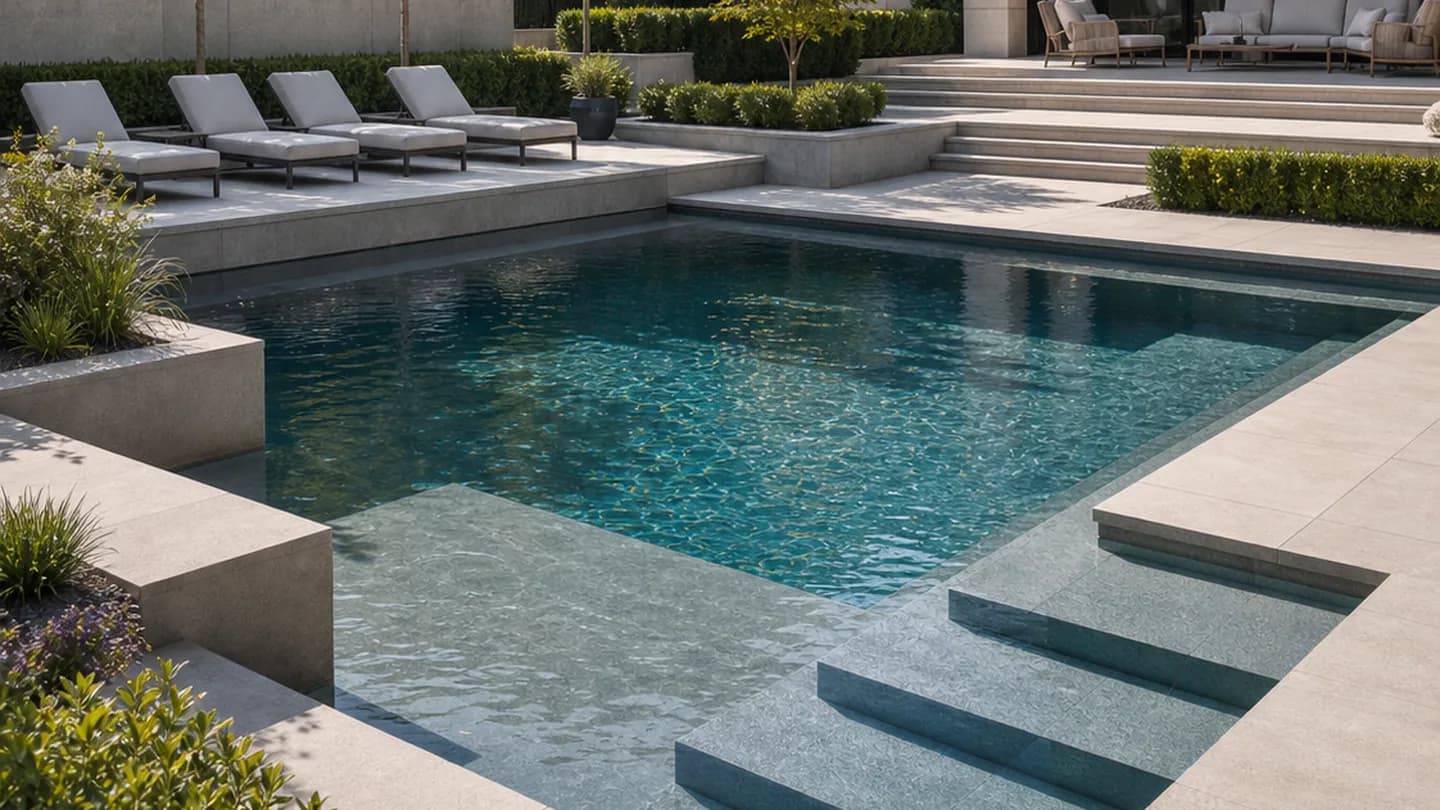
The Short Answer
How deep should an inground pool be?
Most residential inground pools in Virginia range from three to six feet in depth, with a shallow end between three and four feet and a deep end between five and six feet. A uniform depth of four to five feet suits most family swimmers. Diving pools require a minimum of eight feet in the dive zone and are less common due to lot size and safety considerations.
How deep should an inground pool be? The answer depends on who is swimming and how. Most residential pools in the Fredericksburg area are built with a shallow end between three and four feet and a deep end between five and six feet. That depth range suits the majority of family swimmers well, covers lap swimming, and does not require the additional excavation and structural depth of a traditional diving pool.
Standard Depth Ranges for Residential Pools
A pool with a three-and-a-half to four-foot shallow end and a five to six-foot deep end is the most common residential specification K&D builds. At five to six feet, adults can stand and keep their head above water in the deep end, children learning to swim can be supervised without the deep end being unreachable, and recreational swimmers have room to move comfortably.
A flat or uniform depth pool, typically four to five feet throughout, is popular for families where the goal is swimming lessons, family play, and recreational use. Uniform-depth pools maximize the usable swimming area because there is no step transition from shallow to deep, and the entire floor is at a consistent wading depth.
Diving Pool Depths
If you want a diving board, the water beneath the board must meet minimum safe depth requirements. The Pool and Hot Tub Alliance and Virginia building codes specify minimum water depths for diving based on board height and type. For a standard one-meter springboard, a minimum depth zone that extends significantly longer than the board is required, typically reaching at least eight feet at its deepest point and maintaining safe depth over a significant horizontal distance.
Diving pools are less common in residential builds today than they were 30 years ago. The required depth zone takes up a substantial portion of the pool's footprint, the deeper excavation increases cost, and many homeowners find they use a diving board less than they expected. K&D builds pools with diving capability when the design and lot support it, but discusses the actual use tradeoffs honestly during design.
Depth for Different Uses
Lap swimming is comfortable in four to five feet. Serious lap swimmers often prefer a uniform depth so turns are consistent. Water volleyball and family recreation work well in three and a half to four feet, where everyone can stand. Water aerobics and fitness use typically prefers four to four and a half feet. If you have a specific use case in mind, K&D designs the depth profile around it.
How Depth Affects Pool Cost
Deeper pools cost more to build. Each additional foot of depth requires more excavation, more concrete or shell material, more water volume to fill and heat, more chemical treatment to maintain, and structurally more reinforcing in the shell. Going from a five-foot to an eight-foot deep end adds real cost without proportional benefit for most recreational swimmers. K&D prices depth increases honestly so you can weigh the cost against the use.
Tanning Ledge and Shallow Entry Options
A beach entry or zero-entry, which gradually slopes from dry land into the pool, can add a wading zone at zero depth that transitions into the pool's main depth range. This is an alternative to a traditional shallow end with a defined wall, and it is popular for families with young children or dogs. A tanning ledge (see /tanning-ledge-baja-shelf-pools) provides a platform at six to twelve inches without requiring a fully sloped beach entry.
What Depth Is Right for Your Family
A conversation about who will be in the pool most often, how they will use it, and whether any specific activities require a minimum depth gives K&D what they need to design the right depth profile. Most families land on a three-and-a-half to five-foot range that balances safety, usability, and cost. For more on pool sizing, see /what-size-inground-pool-should-you-build. For design features, see /tanning-ledge-baja-shelf-pools, /custom-pool-water-features, or start at /design-your-pool.
More Questions
Frequently Asked Questions
What is the minimum depth for a residential pool?
Three feet is the typical minimum for the shallow end of a residential inground pool. Shallower than three feet limits swimming to small children. Most families find three to three and a half feet comfortable for non-swimmers and early swimmers.
What depth do I need for a diving board?
Diving boards require a deep zone that meets code requirements based on board height. For a standard one-meter board, the dive zone typically needs to reach at least eight feet at its deepest point and maintain safe depth over a defined horizontal distance. K&D reviews these requirements with you if a diving board is part of the design.
What is a good depth for a lap pool?
Four to five feet uniform depth is comfortable for lap swimming. Deeper is not necessary and adds cost. Serious lap swimmers often prefer uniform depth over a shallow-to-deep transition.
Does depth affect heating cost?
Yes. A deeper pool holds more water volume, which requires more energy to heat and more chemical treatment to maintain. Going from a five-foot to a seven-foot deep end adds thousands of gallons of water to the pool volume.
Can I change the depth of a pool after it is built?
Modifying pool depth after construction requires significant structural work: draining the pool, cutting out and rebuilding the shell in the affected area, replumbing if suction or return lines are affected, and refinishing. It is not a routine or low-cost modification.
What depth is safe for a small child?
Three feet or less is the common guideline for young non-swimmers. A tanning ledge at six to twelve inches provides an even safer wading zone. Active adult supervision is required regardless of depth for children who are not strong swimmers.
Also From K&D
Explore More
Talk to a Local Pool Builder.
We build gunite and fiberglass pools across the Fredericksburg area. Ask us anything.