The Short Answer
Should you add a spa or hot tub to your pool?
Adding an in-ground spa to a new pool build is worth it for homeowners who want year-round backyard use, recovery benefits, or a gathering space that works independently of the pool. Building the spa at the same time as the pool is significantly less expensive than adding it later, and the plumbing can be designed to share the pool's equipment.
Adding a spa to your pool is one of the most considered decisions K&D discusses with homeowners during the design phase. A spa connected to your pool extends backyard use through every season, adds a social and wellness dimension to the space, and, when planned together with the pool, costs far less than a standalone addition built later.
In-Ground Spa vs Portable Hot Tub
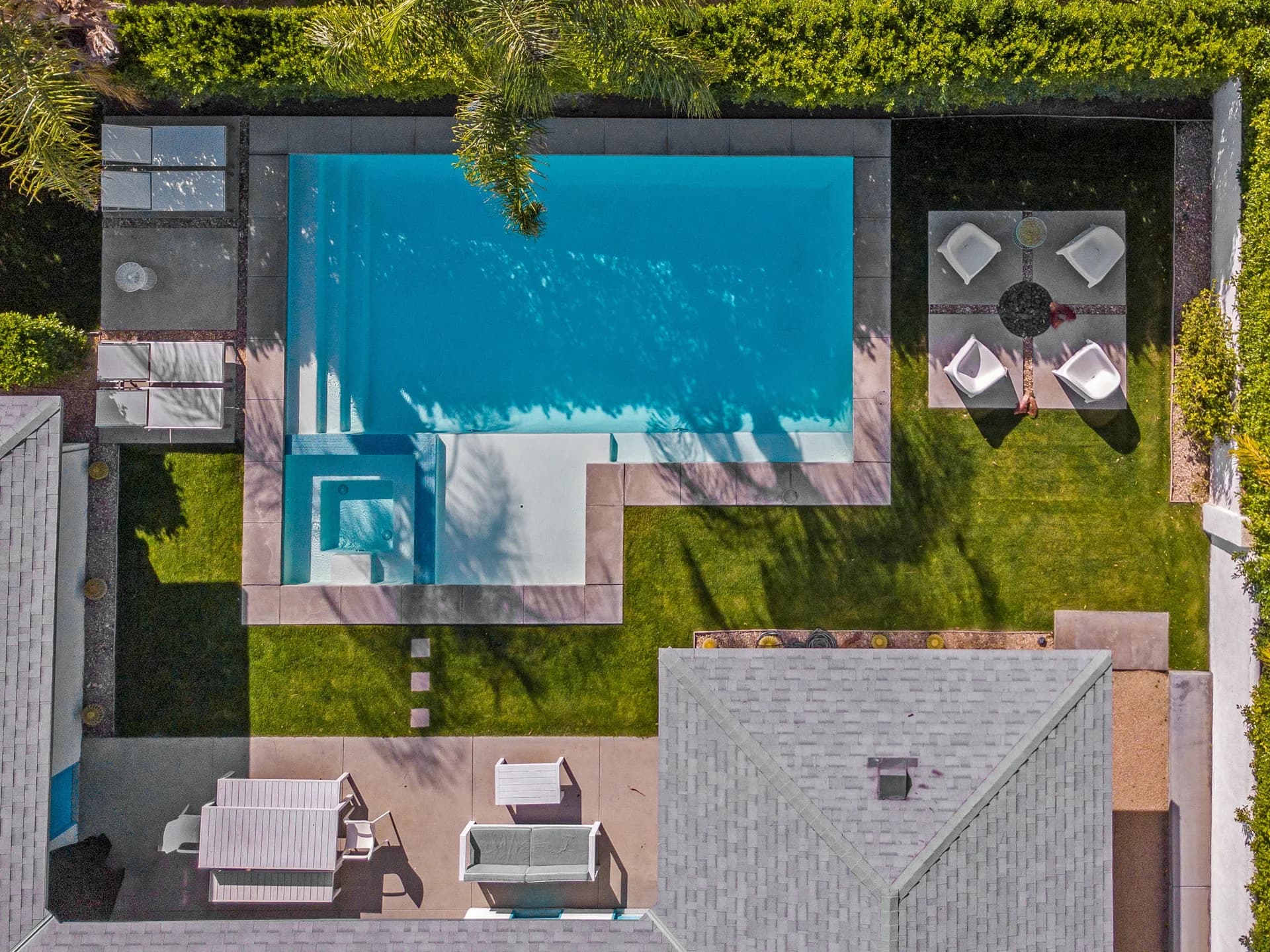
An in-ground spa built as part of a pool project is a structural feature of the pool, not a plug-in appliance. It is formed in gunite or molded into a fiberglass shell as one piece with the pool. The water is typically heated by the same equipment that heats the pool, the filtration runs through the same system, and the visual result is a single unified design rather than a portable tub sitting beside a pool.
A portable hot tub is a lower entry cost but a separate appliance with its own heater, filter, and footprint. It sits above grade rather than in-ground, and it reads differently in the space. If your backyard design goal is a cohesive outdoor resort, an in-ground spa built with the pool is the more architecturally unified choice.
Shared Equipment vs Dedicated Equipment
In Virginia's four-season climate, one of the practical questions is whether the spa can be heated and used independently of the pool. A spa-pool combination designed with a shared single-speed pump runs them together, which is simpler and less expensive but means you heat the entire pool when you only want to heat the spa.
A better-designed system includes a variable-speed pump and plumbing valves that isolate the spa from the pool circuit, so you can heat the spa quickly and economically in the fall and winter without heating 15,000 gallons of pool water. K&D designs pool-spa systems to allow independent operation for exactly this reason.
Spillover Spas
A spillover spa sits elevated slightly above the pool water level and overflows into the pool. This creates the visual and sound effect of a waterfall from the spa into the pool. Spillover spas are a design signature that makes a pool look more resort-like and is visible from inside the house as well as from the pool deck.
The spillover design requires the spa to be raised relative to the pool coping, which adds some complexity to the structural design. K&D builds spillover spas as part of the pool design when the grade and layout allow for the elevated spa position.
Virginia Seasons and Spa Value
The Fredericksburg area pool season without a heater runs roughly late May through September. A spa allows backyard use from March through November with minimal heating cost, since a small spa volume heats to temperature far more quickly than a full pool. Many K&D clients who add a spa report using it more than the pool on a per-visit basis during shoulder seasons.
Cost of Adding a Spa at Build Time
The cost of an in-ground spa added at pool build time is a fraction of what it would cost as a standalone addition built to an existing pool, because the excavation is combined, the plumbing runs are shared, and the deck is planned around both at once. For budgeting purposes, contact K&D for a real range for your design, since spa cost varies by size, shape, and equipment specification.
Is a Spa Right for Your Project?
A spa makes the most sense when you plan to use the backyard in cooler months, when recovery or relaxation is a priority, or when you want a space that guests gravitate to year-round. If your backyard use is purely summer swimming, the spa adds cost for features you may not use enough to justify. K&D is direct about this tradeoff during the design conversation. For related pages see /tanning-ledge-baja-shelf-pools, /custom-pool-water-features, /what-size-inground-pool-should-you-build, and /design-your-pool.
More Questions
Frequently Asked Questions
Can a spa share the pool's heater and pump?
Yes. In-ground spas built with a pool can share equipment, and the most flexible designs include plumbing valves that allow independent spa operation so you can heat only the spa during cooler months without heating the full pool.
How long does it take to heat an in-ground spa?
A properly sized gas heater can bring a spa from ambient to 100 to 104 degrees Fahrenheit in 30 to 60 minutes for a standard 400 to 600 gallon spa volume. Electric heat pumps take longer. K&D sizes the heating equipment to your intended use pattern.
Can I add a spa to an existing pool?
Yes, but it is significantly more expensive and complex than building at the same time, because it requires additional excavation, tying new plumbing into the existing system, and integrating the spa structure with an existing deck. Planning it at the time of the pool build is the most cost-effective approach.
Does a spa require separate permits?
An in-ground spa built as part of the pool project is covered under the pool permit. K&D includes the spa in the permit package for the full pool project.
What is a good spa size?
Most residential in-ground spas seat five to seven people comfortably and run six to eight feet across. Larger spas can seat more but heat more slowly. K&D helps you size the spa for your expected number of regular users.
Can a spillover spa be added to a fiberglass pool?
A fiberglass shell does not typically support an integrated spillover spa because the shells are manufactured separately. Spillover spa designs are most naturally executed in gunite, where the spa and pool are built as one continuous structure.
Also From K&D
Explore More
Talk to a Local Pool Builder.
We build gunite and fiberglass pools across the Fredericksburg area. Ask us anything.